5 things a secret mountain base in Rust teaches about solo survival
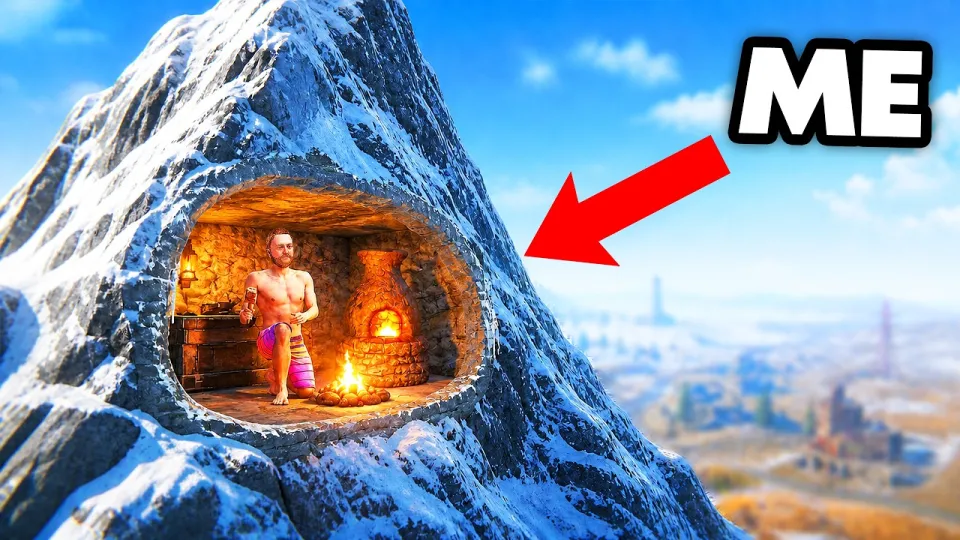
Video: I Lived in a Secret Mountain Base in Rust
Want articles like this for your own video to promote it on YouTube and Google? Order them through the Telegram bot @sat_sit_bot. It writes articles around your video, embeds the video and publishes them on popular niche websites (no ads). Your first 50 articles are free.
· based on the channel Memeio
A secret mountain base in Rust works because raiders attack what they can see, and a small, unlit, low-profile structure tucked into mountain dead ground never enters their list of targets. The goal is not to build something unraidable — it is to build something nobody bothers to scout, so the wipe ends with your loot still inside the walls. The run documented by Memeio in "I Lived in a Secret Mountain Base in Rust" is a practical demonstration of that idea, and the channel's social feed at Memeio on X is where the next experiments get announced.
Why a hidden mountain base beats a bigger base in Rust
Visibility is the real defence stat in Rust, and mountains are the cheapest source of it. Most players travel along roads, rivers and monuments, so a base placed above the tree line but behind a rock shoulder is outside the traffic pattern entirely. A 2x2 with a triangle airlock draws raiders because it is obvious from a distance; the same footprint sunk into a slope with a stone skirt around it reads as terrain.
The trade-off is logistics. Mountain bases sit far from monuments, so every farm run is longer, and climbing costs stamina. That cost is paid back the first time a neighbour with a rocket launcher walks past your door without slowing down. Viewers of the video made the same point bluntly: a base is only hidden from people who are not looking, so the location has to defeat a player who is actively scanning the ridge line.
5 steps to pick a spot nobody scouts
- Walk the ridge before you build. Approach your candidate location from the nearest road, the nearest monument and the nearest beach, and check whether the spot is visible from any of them. If you can see the road, the road can see you.
- Use dead ground, not peaks. A saddle between two summits or the shadow side of a slope hides a structure far better than a summit, which is silhouetted against the sky from every direction.
- Build into rock, not on top of it. Rock clusters and cliff faces break line of sight and give you natural walls; a base that hugs a boulder is harder to spot than one standing free.
- Keep the footprint small. One TC, one loot room, one furnace area. Extra rooms mean extra doors, extra honeycomb and a larger silhouette.
- Kill the light and the smoke. No ceiling lights, no visible campfire, no furnaces running at night. A single glow through a window is the most reliable way to get found on a dark mountain.
Camouflage, lighting and the mistakes that give you away
Camouflage in Rust is mostly about removing contrast, and contrast comes from three things: light, colour and shape. Stone and wood blends into a rock face; sheet metal and HQM glare. That is why the classic mountain setup is stone walls with a wooden or stone roof, no windows facing downhill and no external structures like a separate furnace base or a wind turbine poking above the ridge.
Sound matters as much as sight. Gunfire from your own roof, a repair bench running, or a generator humming at night all carry further on a mountain than players expect, because there is nothing to absorb the noise. The other common giveaway is traffic: if you run the same path to the same monument every ten minutes, someone will eventually follow the route back to your door. Vary the approach and use the terrain instead of the shortest line.
Eco raiding tricks that stretch a solo start
Early-game economy decides whether the mountain plan survives the first night, and one mechanic is underused: broken wooden spears can be turned into stone spears. Craft wooden spears, throw them until they break, then use the broken ones as materials for stone spears — with a modest amount of stone you effectively double the number of spears you get out of a single crafting cycle. Keep broken spears ahead of unbroken ones in the inventory so the crafting order picks the right stack.
Other solo staples worth folding into the routine: recycle at a safe monument only when you have enough to make the trip worthwhile, bank loot in the TC rather than on your body, and never carry the whole farm in one run. A mountain base with a full TC and an empty inventory is a base that survives a bad fight.
Loot, luck and the honesty problem in Rust videos
Every Rust creator eventually gets the same comment: the run looked suspiciously lucky at the start. A lucky loot pull is a real thing — a toolbox, a decayed base or a crate on day one can fund a whole wipe — but viewers are right to treat it as entertainment rather than a template. What transfers from a video to your own wipe is the route, the building decision and the raid response, not the drop table.
That is also why the smaller details matter more than the highlight reel. A hidden base is boring by design: no defence, no counter-raid, no drama. The content comes from the moment someone finally stumbles onto the slope, and from what the builder does in the next thirty seconds. Cheaters remain the one variable no base design solves, and the community reaction to that is consistent across every survival game.
What the mountain base approach actually costs you
A hidden base trades convenience for safety, and the bill arrives in time. Longer farm runs, fewer quick monument cycles, no safe place to craft near a vendor, and a real risk of dying on the climb with a full inventory. If you play in short sessions, that overhead can outweigh the protection.
The approach pays off when your sessions are long enough to bank value, or when the server is crowded enough that every visible base on the road gets scouted. It is also the correct answer for players who would rather keep their loot than win a fight: as one viewer of the video put it, the best raid defence is never being raided. Small, ugly and forgettable is a strategy, not a compromise.
Useful links
- Memeio on X — channel updates, clips and announcements.
- Epidemic Sound — the music library credited for the video's soundtrack.
Final thoughts on hiding in plain sight
The secret mountain base in Rust is not a trick build, it is a discipline: pick dead ground, keep the footprint tiny, remove every source of light and noise, and never let your route become a pattern. Memeio's run shows the payoff — a full wipe without a single serious raid attempt — and also the cost, which is boredom and long walks. Treat the video as a set of decisions to copy rather than a loot table to expect. For more of these experiments, follow the channel and check Memeio on X for what comes next.
Key takeaways
- A hidden mountain base in Rust survives by being unnoticed, not by being strong: small footprint, low profile, no lights and no smoke visible from the road.
- Rust map generation gives mountains plenty of dead ground — slopes, rock clusters and ledges that break line of sight from common travel routes.
- Broken wooden spears can be recycled into stone spears, effectively doubling spear count from the same amount of stone.
- Solo players lose bases to offline raids and to being scouted; a base nobody visits removes most of that risk.
- Memeio's channel documents the run in the video "I Lived in a Secret Mountain Base in Rust".
Questions & answers
Is a secret mountain base in Rust actually safe from raids?
It is safer than a visible base, not immune. Raiders attack targets they can find, so a small unlit structure in dead ground removes most of the risk. A determined group with a flying scout or a lucky patrol can still find it, which is why you keep the loot split and the footprint small.
Where on the map should a solo player build a hidden base?
Look for dead ground rather than summits: saddles between peaks, the shadow side of a slope, and gaps between rock clusters. Test the spot by walking to the nearest road and monument and checking whether you can see it from there. If you can see the road, the road can see you.
How do you keep a mountain base from being spotted at night?
Remove light sources entirely. No ceiling lights, no campfires, no furnaces burning after dark, and no windows facing downhill. Sound carries too, so avoid firing from your own roof and running generators overnight. Contrast is what gets bases found, not size.
What is the broken spear trick in Rust?
Broken wooden spears can be used as materials to craft stone spears, so throwing wooden spears until they break effectively doubles your spear output for the same stone cost. Keep the broken spears ahead of the unbroken ones in your inventory so crafting consumes the right stack.
Source: I Lived in a Secret Mountain Base in Rust · Markdown version